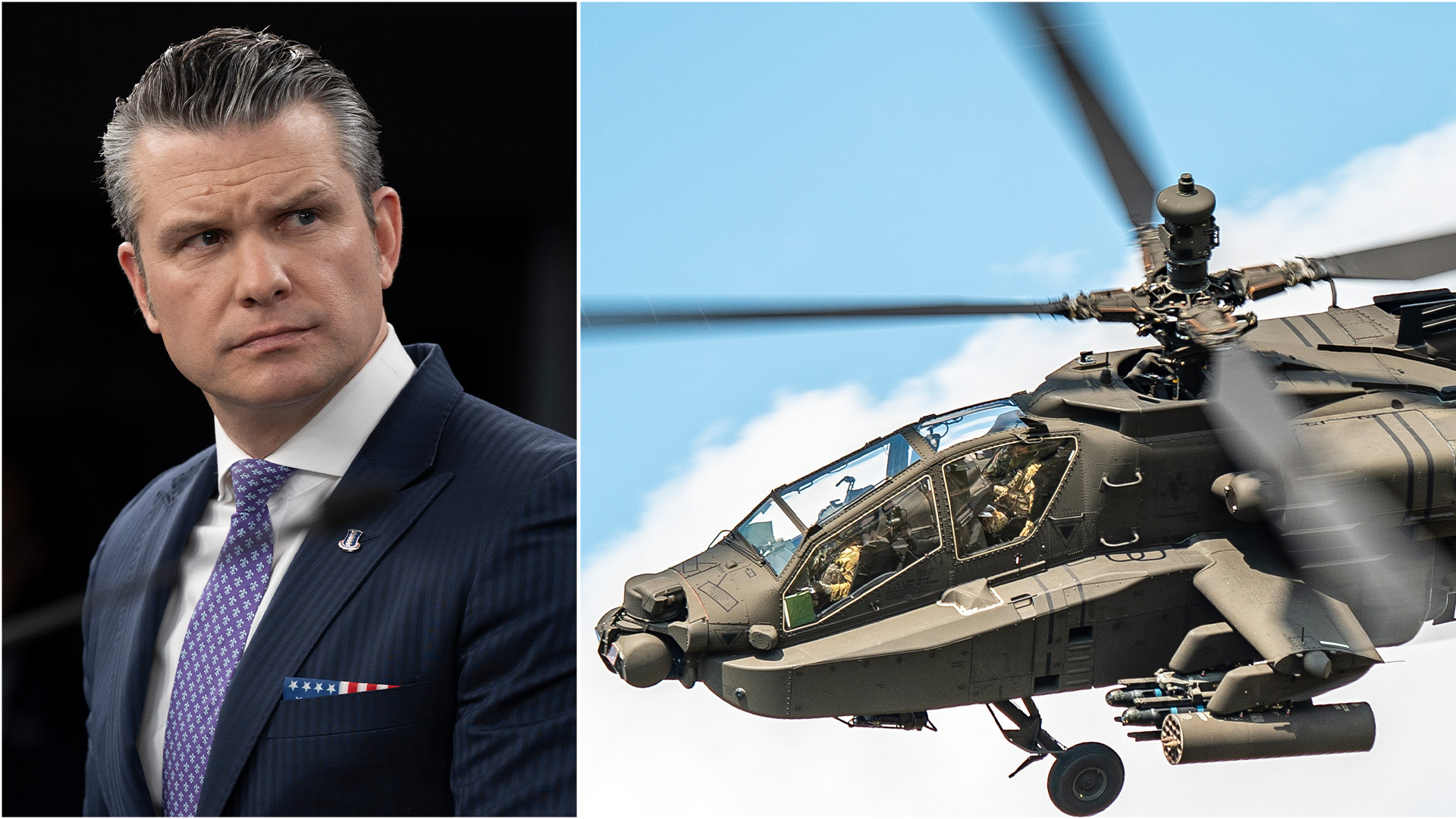
For the second time in five months, Defense Secretary Pete Hegseth appeared to wade into an internal Army flight safety investigation late Thursday, tweeting support for eight AH-64 Apache pilots and crew who were suspended by their unit after flying low passes past crowded July 4th beaches in South Carolina.
“We’ll fix this,” Hegseth tweeted Thursday night, hours after local news reported that the eight South Carolina National Guard pilots had been grounded. “Carry on, Patriots, ” Hegseth wrote, echoing a tweet from March when he unilaterally absolved four other Apache flyers in another safety investigation.
Friday morning, Pentagon spokesperson Sean Parnell posted that “effective immediately, the suspension of all involved South Carolina pilots has been lifted.”
The eight pilots were grounded earlier this week, Guard officials said, after buzzing past several beaches during a statewide holiday airshow known as Salute From The Shore. The annual July 4th event features an aerial parade down the state’s coastline by military aircraft based in South Carolina, passing over popular beaches in Myrtle Beach, Charleston, and Hilton Head.
The Salute From The Shore instagram accounted said the AH-64 were from the 1-151st Attack Battalion at McEntire Joint National Guard Base, outside Columbia.
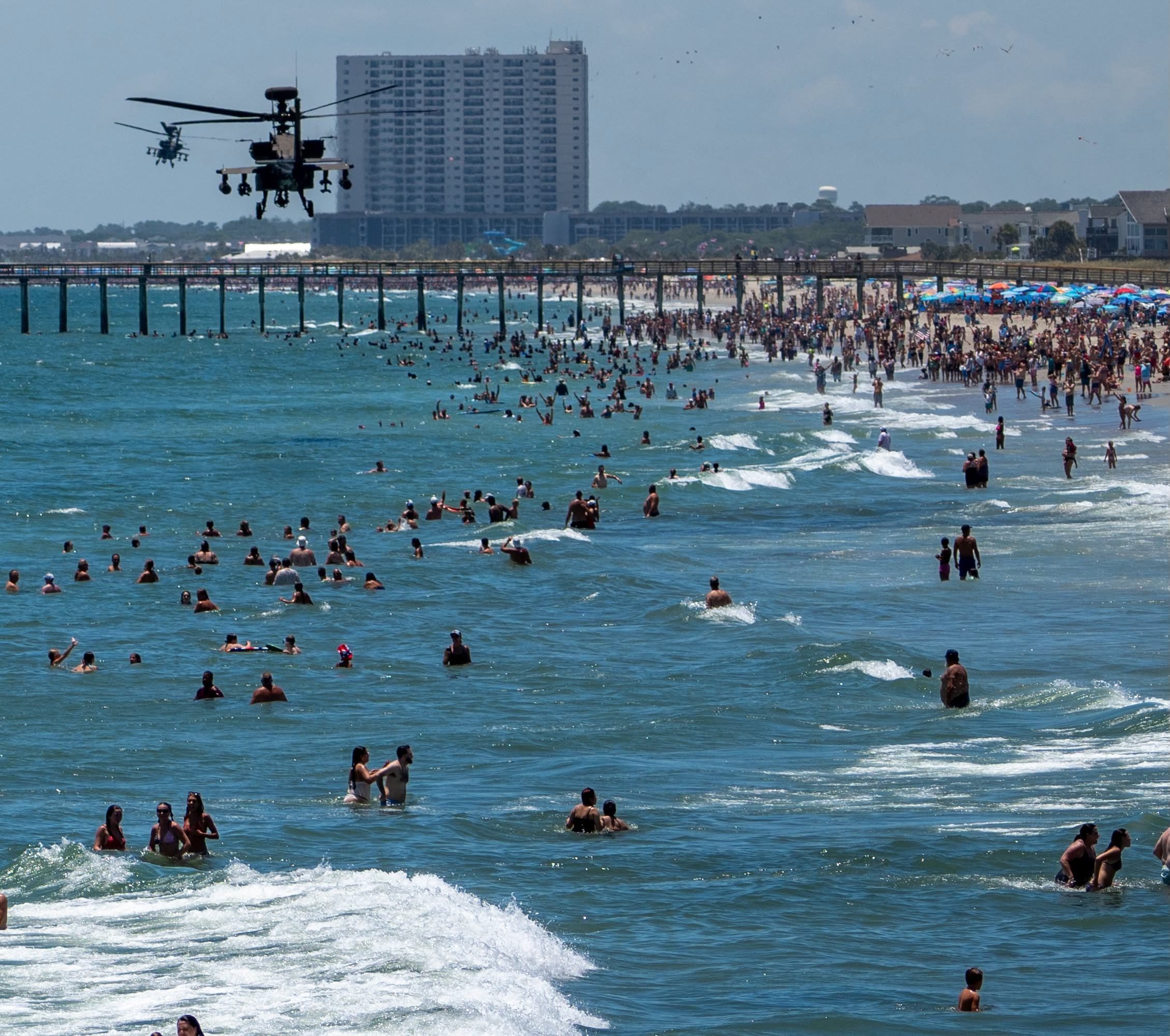
Numerous beachgoers posted videos and photos of the helicopters buzzing over beachgoers and swimmers. By Thursday afternoon, local politicians had began to call for the suspensions to be lifted, while many wondered if Hegseth would intervene, as he had in a similar kerfuffle in March when a flight of Apaches from the 101st Airborne Division buzzed the Tennessee home of singer Kid Rock. When video of that flyby emerged, leaders at the 101st grounded the crew as part of a safety investigation, but Hegseth short-circuited the inquiry with his first “Carry on, Patriots” tweet.
Hours before Hegseth weighed in, South Carolina officials appeared to be in full damage control mode. A full-color informational graphic posted to the guard’s social media — replete with “shaking hands” and “group heart” logos — soft-peddled the suspensions as “non-punitive.”
“We sincerely appreciate the strong community support for our service members and the enthusiasm surrounding the ‘Salute from the Shore’ event,” the statement said. “We are also aware of the public feedback and concerns regarding the temporary suspension of the Apache pilots involved. We want to assure the community that a temporary suspension from flight duties is a routine administrative measure whenever a flight profile is under review.”
Helicopters and public events can be deadly mix
Though the Kid Rock and South Carolina episodes did not end in injuries or damage, other recent, well-intentioned public events featuring military helicopters have.
In April 2025, a pre-approved, carefully planned “visit” by an Air Force HH-60W rescue helicopter to an elementary school on Kadena Air Force Base, Japan, went terribly wrong. A Japanese woman was killed when the helicopter’s rotorwash knocked her onto a concrete sidewalk. Several children from the school were also knocked over, but were largely unhurt.
An investigation board found that personnel at the 33rd Rescue Squadron who planned the event were deeply committed to safety. Some squadron members had children who attended the school. But the planners mistakenly followed normal Air Force safety rules for helicopter operations, rather than separate, far more conservative guidelines the Air Force maintains for public events like air shows and demonstration flights.
As a result, the woman and some children were less than 100 feet from the helicopter as it landed, rather than 600 feet required by the safer rules. Both the crew and squadron leaders, the report said, approached the flight with a “false confidence of safety.”
Though the Air Force has a specific flight manual dedicated to flight rules for public events, the Army does not. Instead it includes directions for public events like Salute From The Shore in its primary flight manual, AR 95-1, with additional guidance included in its Pubic Affairs rules. Both documents generally defer to civilian rules for public events, which are governed by the Federal Aviation Administration.
FAA rules require fixed-wing aircraft to fly 500 feet over airshows in “non-congested areas” like a typical beach on the ocean, but 1,000 feet over airshows and other large crowds classified as “congested areas,” helicopters can fly lower if on approved helicopter flight paths.
Update, 7/10/2026: This story was updated after the Pentagon confirmed that the eight aviators had been returned to flight duty.